Highbridge StudiesJersey City and Hoboken
Cost segregation in Jersey City and Hoboken
Cost segregation in Jersey City and Hoboken involves the newest large stock of rental buildings in the region alongside some of its oldest row houses. Highbridge Studies prepares studies throughout Hudson County.
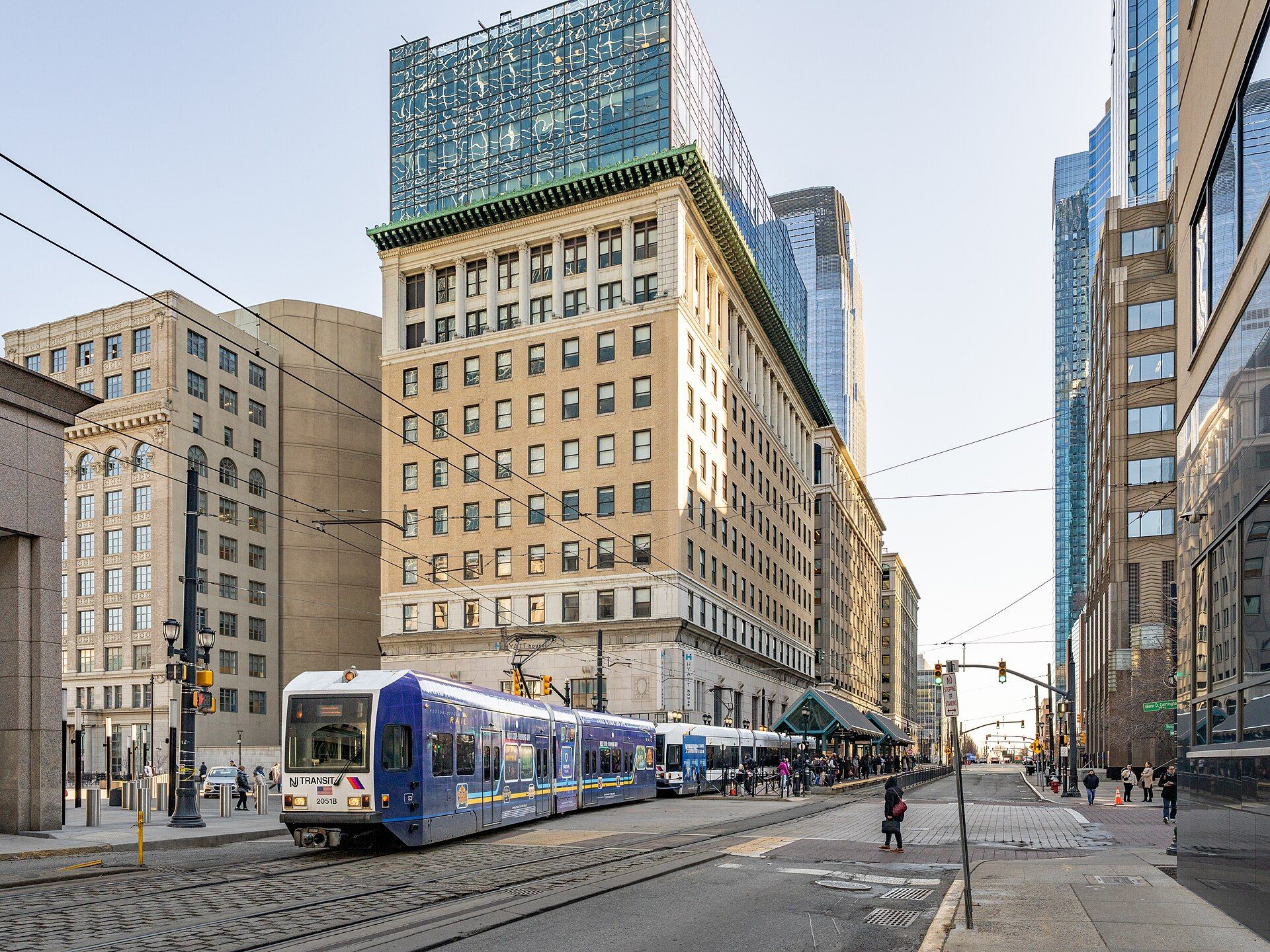

The buildings
Few parts of the metropolitan area have built as much rental housing in the past twenty years as the Hudson County waterfront. Newport, Exchange Place and Paulus Hook in Jersey City are lined with towers, Journal Square has followed with towers of its own, and mid-rise buildings of wood frame over a concrete podium have filled in Bergen-Lafayette, the Heights and the streets near the light rail. Harrison, Bayonne, Weehawken and West New York have seen the same kind of construction. These buildings share a pattern: structured parking, retail at the base, a floor or more of amenities, and an owner who furnished the common areas, the gym and the roof deck directly. They also share complete records, because nearly all were built with construction financing.
Hoboken and downtown Jersey City are also row house towns. Brick and brownstone houses of three and four stories, and old walk-ups with a store on the corner, have been renovated into rentals in much the same way as their counterparts in Brooklyn, and former factories and warehouses have been converted to lofts. Both cities flood. Since Hurricane Sandy, new and renovated buildings have moved mechanical equipment out of cellars, raised electrical service and added flood protection at grade, work that is usually well documented and worth identifying separately.
Union City, North Bergen and West New York hold dense blocks of older apartment buildings, and Secaucus and Kearny hold the county’s warehouses and many of its hotels.
Records
New Jersey construction permits are issued by each municipality’s construction office under the state’s Uniform Construction Code, and permit records can be requested from the municipality. For a new building the requisitions and the owner’s ledger are the core of the study. For a renovated row house it is the contract, the invoices and the permit record. For an older apartment building bought as it stood, the closing statement, the appraisal and the inspection carry the work.
Common situations
A developer completes a podium building, leases it up and holds it. An investor buys a stabilized tower from its developer and receives an appraisal and a closing statement but none of the construction file. An owner renovates a Hoboken row house into rentals. An investor buys an older apartment building in Union City or West New York and begins renovating it. The first and third are studied from construction records and the others as acquisitions, and both approaches are described on the services page.
Site visits
The waterfront and downtown are reached by PATH or ferry and the rest of the county by car. A new rental building can take most of a day to record properly, from the garage through the amenity floors to the roof. Row houses and small buildings are arranged with the owner and take less time.
The page on multifamily cost segregation describes the components typically examined, including amenity spaces and ground-floor retail.
Other areas served
Highbridge Studies works throughout the New York City metro area, including New Jersey: Manhattan, Brooklyn, Queens, the Bronx, Staten Island, Westchester, Long Island, Bergen County, Newark and Essex County, Monmouth County and New Jersey.