Highbridge StudiesQueens
Cost segregation in Queens
Cost segregation in Queens ranges from garden apartments to airport hotels. Highbridge Studies prepares studies across the borough, which has the most varied building stock in the city.

The buildings
Queens was built later than Manhattan and Brooklyn, and more spaciously. Its characteristic apartment buildings are the six-story elevator houses of Jackson Heights, Forest Hills, Rego Park, Kew Gardens and Flushing, built from the nineteen twenties through the sixties, and the garden apartment complexes of eastern Queens, low brick buildings set around lawns and parking courts. In a garden complex a real share of the cost lies outside the buildings, in paving, walks, lighting, fencing and drainage, and a study of one spends as much time on the site plan as on the apartments.
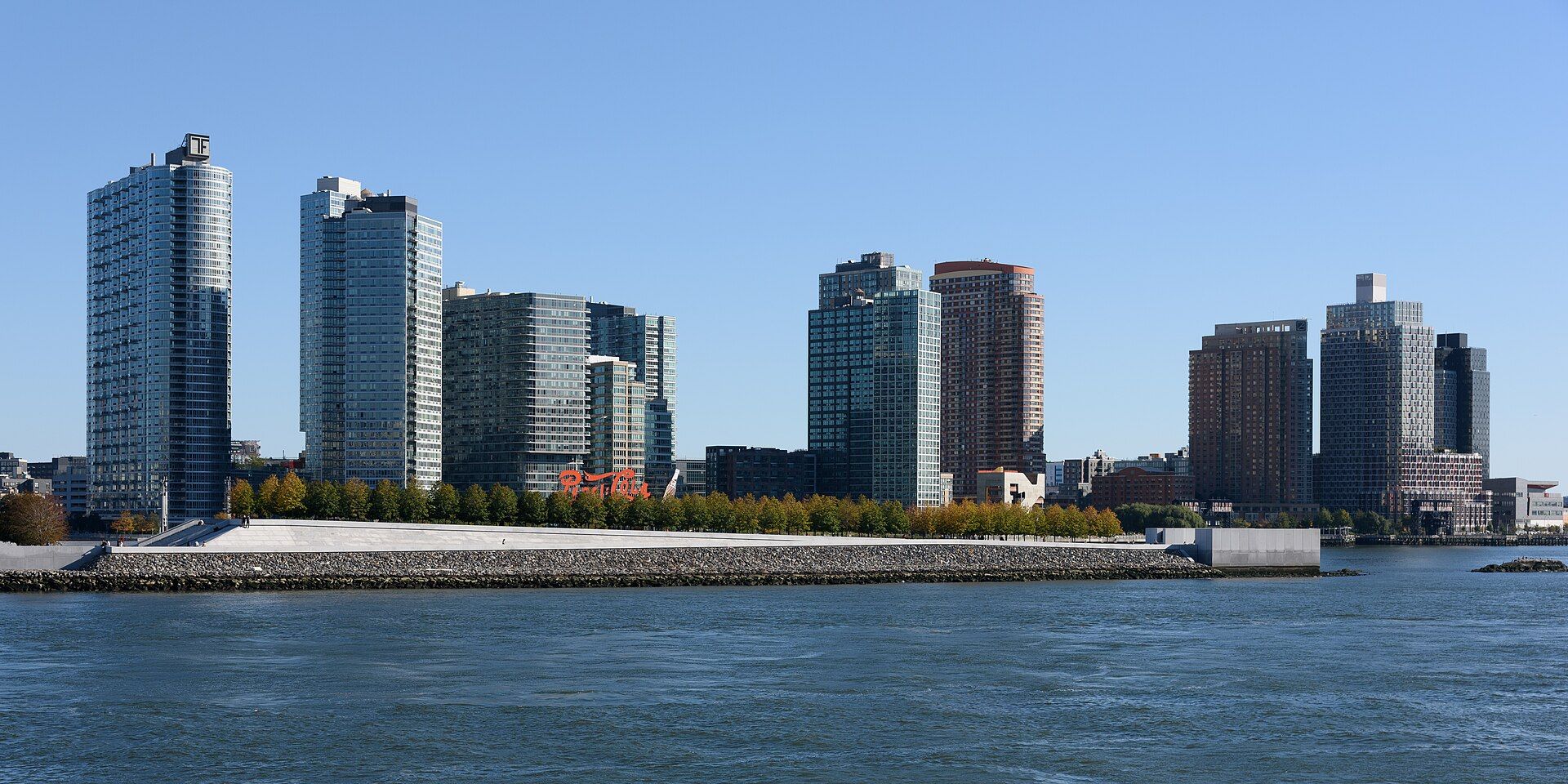
Long Island City and Astoria are the newer story: high-rise and mid-rise rentals built in the past two decades, with amenity floors, parking and retail at the base, and with complete construction records. Flushing has developed a form of its own, the mixed-use building that stacks retail, offices, medical suites and apartments or a hotel on one lot, often divided into condominium units, where the first task is to establish exactly what the owner owns.
Hotels are concentrated around the two airports, in Long Island City, and in downtown Flushing and Jamaica. The industrial districts of Maspeth, Long Island City, College Point and the streets around Kennedy Airport hold warehouses, distribution buildings and freight facilities, where paving and loading areas are a large part of what a study examines.
Records
Hotel owners generally have purchase records for furniture, fixtures and equipment, which is the largest single category in a hotel study. For the borough’s new rental buildings the requisitions and the owner’s ledger do most of the work. For older apartment houses and garden complexes, the records of roof, boiler, window and paving projects are worth finding, as are the files kept for rent-stabilized apartments. Department of Buildings filings and certificates of occupancy are used to confirm dates.
Common situations
The purchaser of a garden complex, where much of the cost lies in the grounds. The developer of a new rental building in Long Island City or Astoria who is holding it after completion. The owner of a limited-service hotel near one of the airports who has just bought or renovated it. The owner of a commercial condominium unit in Flushing, newly fitted out for a medical tenant. The services page explains how each kind of study is approached.
Site visits
Most of Queens is reached by car, and the larger properties take time to cover. A garden complex may have dozens of buildings, and a representative number are entered while the grounds are covered in full. Warehouses and hotels are visited during working hours with the manager. As elsewhere, the visit is recorded, and occupied apartments and guest rooms are seen only as the owner arranges.
The page on multifamily cost segregation goes through the components typically examined in apartment buildings, and the page on property types covers hotels, warehouses and other commercial property.
Other areas served
Highbridge Studies works throughout the New York City metro area, including New Jersey: Manhattan, Brooklyn, the Bronx, Staten Island, Westchester, Long Island, Jersey City and Hoboken, Bergen County, Newark and Essex County, Monmouth County and New Jersey.